For years, spreadsheets have been the backbone of small business operations. From tracking sales and managing leads to organizing inventory and reporting numbers, tools like Excel and Google Sheets have helped teams stay organized without spending much on software.
As businesses grow, data becomes messy, tasks become repetitive, and teams spend more time updating sheets than actually doing meaningful work. Manual processes slow things down. Mistakes increase. Collaboration gets harder.
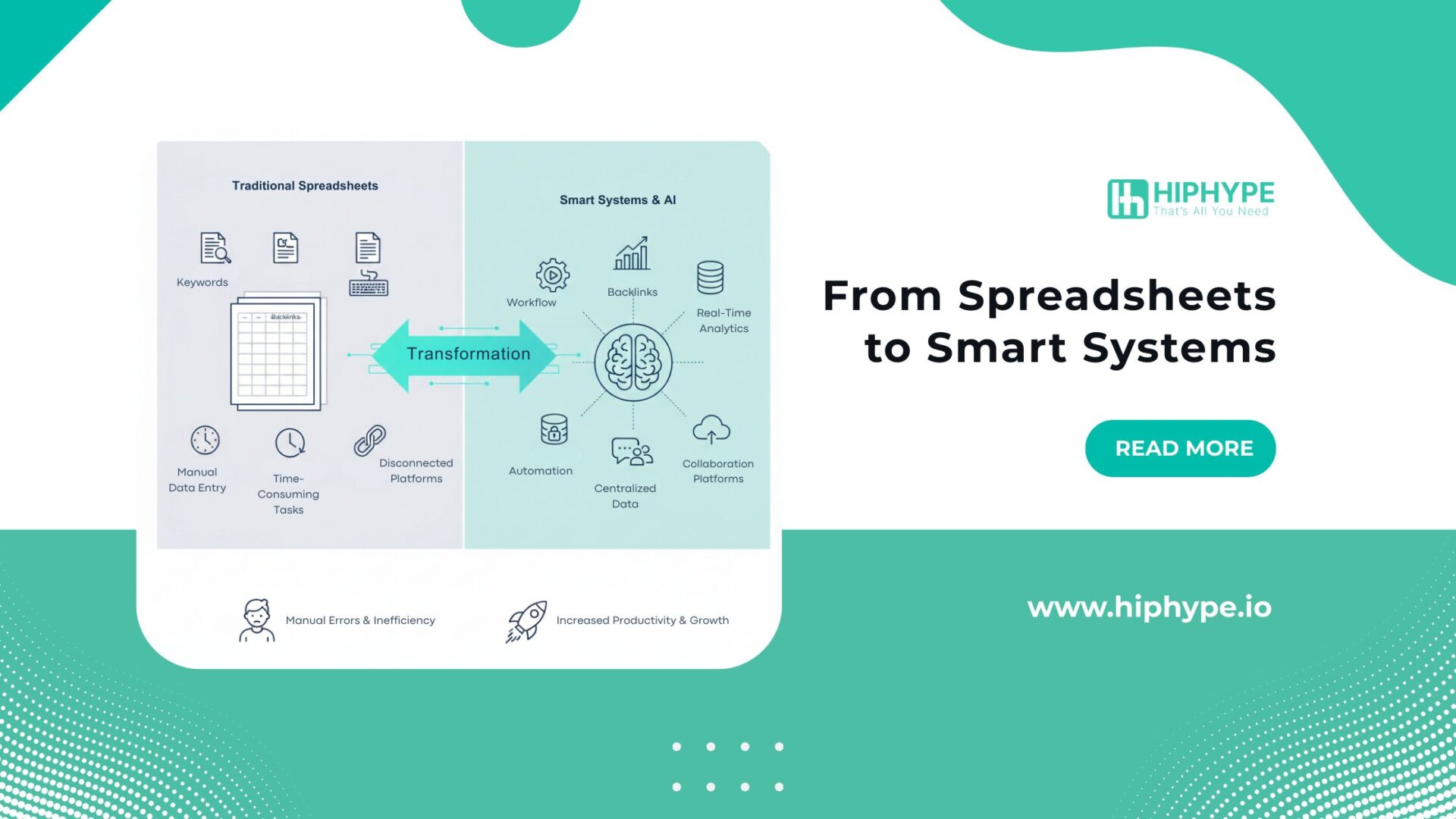
That’s why many small teams are now moving from spreadsheets to smart systems — using AI-powered tools, workflow automation, and custom digital platforms to modernize their operations and work smarter, not harder.
In this blog, we’ll explore how modern businesses are replacing manual spreadsheets with smart business systems, and how this shift improves productivity, accuracy, and growth.
The Problem with Spreadsheets as You Scale
Spreadsheets are great in the beginning. They’re simple, flexible, and easy to set up.
But as your business grows, they start creating problems.
Here’s what typically happens:
- Too many versions of the same file
- Manual data entry mistakes
- Time wasted updating formulas
- No real-time insights
- Difficult collaboration between teams
- No automation
For example, imagine a small marketing agency tracking leads, invoices, and campaign results in separate sheets. Every week, someone manually copies data from one file to another. Reports take hours. Errors happen easily.
This is where manual workflows start costing more than they save.
And that’s when teams realize: spreadsheets are not systems.
What Are Smart Systems?
Smart systems are modern digital platforms that automate tasks, centralize data, and give real-time insights.
Instead of manually updating files, these systems:
- automatically collect data
- sync tools together
- generate reports instantly
- reduce human errors
- support collaboration
- scale as your business grows
They often include:
- workflow automation software
- AI-powered dashboards
- CRM systems
- custom web apps
- integrated business tools
Why Small Teams Are Switching to Smart Systems
1. Save Time on Repetitive Work
Manual tasks eat up hours every week.
Things like:
- copying data
- sending follow-ups
- updating reports
- tracking orders
With workflow automation, these tasks happen automatically.
For example:
- leads go directly into your CRM
- invoices generate automatically
- reports update in real time
This gives teams more time to focus on strategy and growth instead of admin work.
2. Fewer Errors, Better Accuracy
Humans make mistakes. Especially when doing repetitive work.
One wrong number in a spreadsheet can break your entire report.
Smart systems reduce errors by:
- auto-validating data
- syncing information across tools
- removing manual entry
This improves business efficiency and builds trust in your data.
3. Real-Time Business Insights
Spreadsheets show what already happened.
Smart systems show what’s happening now.
With AI-driven analytics and dashboards, you can instantly see:
- sales performance
- marketing results
- customer behavior
- revenue trends
This helps business owners make faster and smarter decisions without waiting for weekly reports.
4. Better Team Collaboration
When teams rely on spreadsheets, collaboration gets messy:
“Which file is the latest?”
“Who updated this?”
“Why is this number different?”
Modern cloud-based platforms solve this by:
- centralizing everything in one place
- allowing real-time updates
- giving role-based access
- tracking changes automatically
Everyone stays aligned without confusion.
5. Easier Scaling
Spreadsheets don’t scale well.
As your business grows:
- data increases
- processes get complex
- more people need access
Smart systems are built to grow with you.
Whether you add 10 customers or 10,000, your custom platform or AI-powered system handles it smoothly.
Real-World Example
Let’s say a small e-commerce brand manages orders in Google Sheets.
Every order is manually added. Inventory is updated by hand. Emails are sent individually.
After switching to a smart system:
- orders sync automatically
- inventory updates instantly
- emails send automatically
- sales dashboard updates live
Result?
Less manual work.
Faster operations.
Happier customers.
This is the power of digital transformation for small teams.
How to Start Moving Beyond Spreadsheets
You don’t need to replace everything at once.
Start small.
Step 1: Identify repetitive tasks
Find what wastes the most time.
Step 2: Automate one process
Try tools like:
- CRM systems
- automation tools
- custom dashboards
Step 3: Integrate tools together
Connect your apps so data flows automatically.
Step 4: Consider a custom platform
If your workflows are unique, building a custom business system may be more efficient than using many disconnected tools.
The Future of Small Business Operations
In 2026 and beyond, businesses that still depend only on spreadsheets will struggle to compete.
Modern companies are adopting:
- AI automation
- smart workflows
- real-time analytics
- custom digital platforms
Not because it’s trendy — but because it’s necessary.
Smart systems help small teams operate like large companies without hiring more staff.
And that’s a huge advantage.
Conclusion
Spreadsheets helped businesses get started. But they weren’t built for growth.
As teams scale, manual processes slow everything down.
By moving from spreadsheets to smart systems, small businesses can automate work, reduce errors, improve collaboration, and make faster decisions using real-time data.
The goal isn’t to replace people — it’s to empower them with better tools.
Start small. Automate one process. Build smarter systems step by step.
Because the future belongs to businesses that work intelligently, not manually.