Introduction
In 2026, businesses are rapidly adopting artificial intelligence to improve efficiency, reduce manual work, and scale operations.
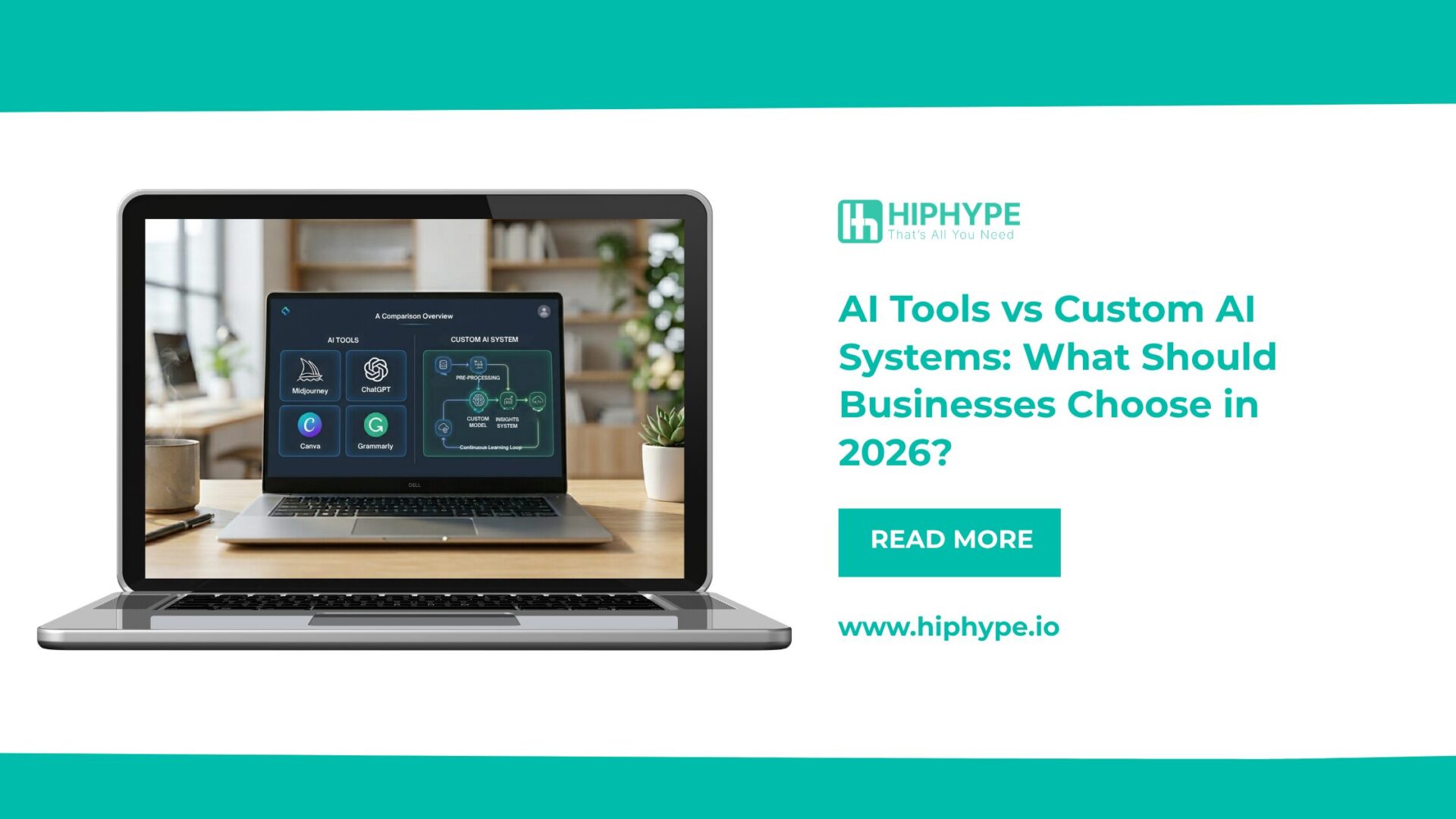
One of the most important decisions companies face is whether to use AI tools for business or invest in custom AI systems. Both options can support business automation, but they serve different purposes depending on your needs.
Understanding the difference between these approaches helps businesses choose the right strategy for long-term growth.
What Are AI Tools for Business?
AI tools are ready-made platforms designed to perform specific tasks. These tools are widely used for AI automation in business because they are easy to set up and require minimal technical knowledge.
Common examples include:
- Email automation tools
- Chat systems for customer support
- Content generation platforms
- Data analysis tools
These solutions are ideal for businesses that want to start using AI in business operations without complex setup.
What Are Custom AI Systems?
Custom AI systems are built specifically for a business based on its workflows, processes, and goals.
Unlike ready-made tools, these systems:
- Integrate deeply with existing platforms
- Support unique business workflows
- Handle complex operations
Custom solutions are often used for advanced AI implementation in business, where flexibility and scalability are important.
Key Differences Between AI Tools and Custom AI Systems
1. Setup and Implementation
AI tools are designed for quick setup. Businesses can start using them almost immediately.
Custom AI systems require planning, development, and testing before implementation. However, they provide a more tailored solution.
2. Flexibility and Customization
AI tools offer limited customization since they are built for general use.
Custom AI systems are designed to match specific business processes, allowing greater flexibility and control.
3. Integration with Existing Systems
Many AI tools work independently and may not fully connect with all platforms.
Custom systems are built to integrate with CRM, analytics, and internal tools, creating a more connected AI-powered business system.
4. Cost Consideration
AI tools usually have a lower upfront cost, making them accessible for small and medium businesses.
Custom AI systems require a higher initial investment but provide better value over time through improved efficiency and scalability.
5. Scalability and Long-Term Use
AI tools are effective for basic tasks but may become limiting as the business grows.
Custom AI systems are designed to scale with the business, supporting long-term business automation strategies.
When Should Businesses Choose AI Tools?
AI tools are suitable when:
- You are starting with AI adoption in business
- Your workflows are simple
- You need quick results
- You want to test AI use cases
They provide a practical entry point into AI-powered automation.
When Should Businesses Choose Custom AI Systems?
Custom AI systems are ideal when:
- Your operations involve complex workflows
- You need full control over processes
- You want to build scalable systems
- You are focused on long-term growth
They are better suited for advanced AI solutions for business.
Common Mistakes to Avoid
Many businesses make mistakes when choosing between tools and systems.
These include:
- Selecting tools without clear goals
- Investing in custom systems too early
- Ignoring integration between platforms
- Focusing on features instead of outcomes
Avoiding these issues helps create a more effective AI strategy for business.
Practical Example
A growing business may begin with AI tools such as email automation and basic CRM integrations.
As operations become more complex, the business may shift to a custom AI system that connects multiple workflows, automates processes, and supports decision-making.
This transition improves efficiency and supports long-term scalability.
FAQs
1. What is the difference between AI tools and custom AI systems?
AI tools are ready-made solutions for specific tasks, while custom AI systems are built to match a business’s unique workflows and requirements.
2. Are AI tools enough for business automation?
AI tools are useful for basic automation, but they may not support complex workflows or advanced business needs as the company grows.
3. When should a business switch to custom AI systems?
A business should consider custom AI systems when workflows become complex, integration is required, and scalability becomes a priority.
4. Are custom AI systems expensive?
They require a higher initial investment, but they provide long-term value by improving efficiency and supporting growth.
5. Can small businesses use custom AI systems?
Yes, but it is usually better to start with AI tools and move to custom systems as the business expands.
6. Which option is better for long-term growth?
Custom AI systems are generally better for long-term growth because they offer flexibility, scalability, and deeper integration.
Conclusion
Choosing between AI tools and custom AI systems depends on your business stage, goals, and operational complexity.
AI tools provide a simple and cost-effective way to start using AI, while custom AI systems offer deeper integration and long-term scalability.
Instead of choosing one over the other, businesses should focus on using the right approach at the right time. A clear strategy ensures that AI for business automation delivers real and sustainable results.